A Model of the Thing Is Not the Thing
Ford sculpts its cars in clay, draws them in CAD, and hired about 300 veterans to retrain its AI. All three are models, and a model of the thing is not the thing.
By Geordie Everitt
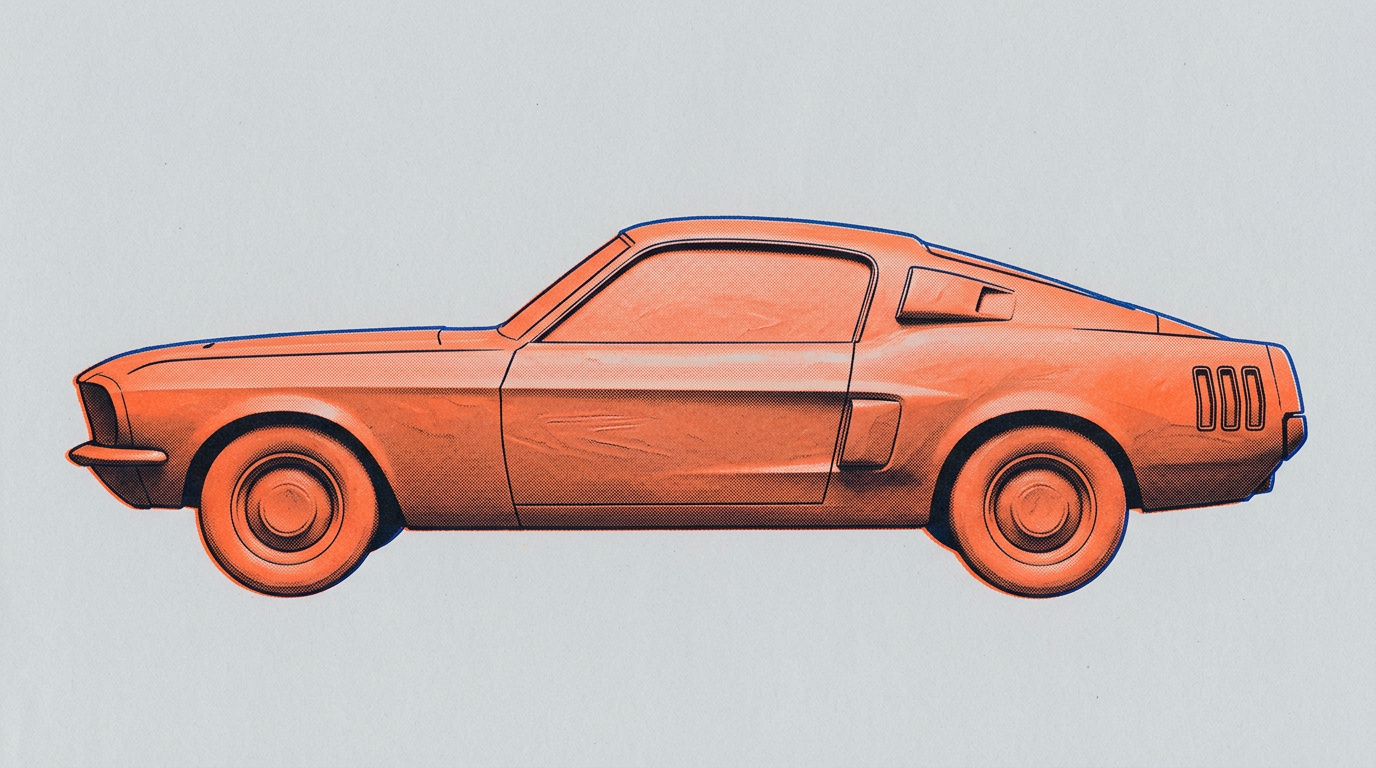
Ford still sculpts its cars in clay.
It does this at full size, in a studio in Dearborn. Designers walk around the clay and argue about it. Engineers draw the same car in CAD, to tolerances no hand could feel. Both are models of the car. Neither one can be driven.
A spreadsheet that forecasts next year's sales is a model of the business. A large language model is a model of the text people have written. CAD models, spreadsheet models and language models are the same kind of thing: a stand-in for something real, built from whatever could be put into it.
Last summer Ford's chief executive told an audience at the Aspen Ideas Festival that AI would replace half of all white-collar workers in the country. This June, Ford's vice president of vehicle hardware engineering, Charles Poon, told reporters that the company had hired about three hundred veteran engineers over the past few years. Its AI quality tools had not delivered what Ford expected, and many experienced engineers had left before anyone used what they knew to train the tools. Poon put the lesson in a sentence: AI is a fantastic tool, but it is "only as good as the information you use to train it."
A company does not often say that out loud, and Ford did.
The Record Is a Model
Poon is right, and it helps to ask what information means inside a car company. It means what somebody wrote down: inspection reports, warranty claims, test results, the tickets engineers filed. Every entry is something a person noticed, judged worth recording and typed into a form. The record is a model of quality, built by the people who produced it. An AI trained on it is a model of the model.
I hold that intelligence is prediction: a brain, or a machine, takes what it has seen and estimates what comes next. I laid out the limits of that idea in Intelligence Is Prediction, and Prediction Has a Ceiling. A tool trained on the record predicts what the record would say next, and it does that very well. The car on the line goes on doing things the record has not heard about yet.
What a Wince Knows
Picture a veteran engineer looking at a drawing and wincing before she can say why. The wince is a prediction too. It was trained differently. The model has the record. She has the consequences: the launch that slipped, the recall she sat through, the weekend the line was down. Her nervous system stamped each of those with what it cost, and the stamp fires when a new drawing resembles an old mistake.
Stamping experience by what it cost is the job the limbic system evolved to do. An animal that had to be told twice that something hurts did not leave many descendants. A warranty claim records that a bracket failed, and it does not flinch. In Why More GPUs Will Never Make AI Conscious I made the same point about feeling: a map of the rainforest can depict the rain in perfect detail, and the map does not get wet.
Why There Is More Than One Model
Go back to Dearborn. Ford draws the car in CAD and sculpts it in clay because each model leaves out something the other keeps. Ford says full-size clay shows problems that small models and screens hide, and that a group can gather around one object and work on it together. CAD holds every dimension exactly and has nothing to say about how a line looks from across the studio. Each model answers the questions it was built to answer. The car answers the rest.
A spreadsheet works the same way. It holds the cells somebody filled in, and the business goes on doing things no cell describes. A language model holds the text people wrote, and the world goes on doing things that text never covered.
Capturing Is Still Modeling
The usual moral of the Ford story is to capture what your experienced people know before they leave. The instinct is sound and the method has a ceiling. A document that records what an engineer knows is a model of the engineer. It holds what could be said. Interview a veteran for a week and you will collect a great deal, and you will not collect the wince.
Look at what Ford did. It hired veteran engineers, took them off the daily production schedule, and put them in charge of mandatory weekly design reviews that look for failure points before a drawing reaches the factory. They also retrain the AI tools and mentor younger engineers.
The Scoreboard Is a Model Too
Ford's own scoreboard needs the same treatment. This year Ford ranked first among mainstream brands in J.D. Power's Initial Quality Study, its first win since 2010. The study asks owners what went wrong in their first ninety days, and it is a good model of quality. In the same year Ford has issued more recalls than any other automaker, and a recall count is a model of quality too, built from a different record. Neither number is the car. A company that reads either one as the truth about its cars has swapped the model for the thing.
Close Enough
Cars used to be drawn by hand at drafting tables. CAD arrived, the drawing moved onto a screen, and the tables went away, along with many of the people who sat at them. The CAD model is a model of the car, and it was close enough for that job, so the work moved to it.
By Ford's own account, its AI quality tools were not close enough for theirs until the veterans retrained them. How far a model sits from the thing depends on the job, and it moves with the year. Some readers will take the Ford story as proof that experienced people stay necessary. Others will see a gap that is closing. The fact underneath is the same for both: a model of the thing is not the thing, and what it can stand in for is the distance between them.