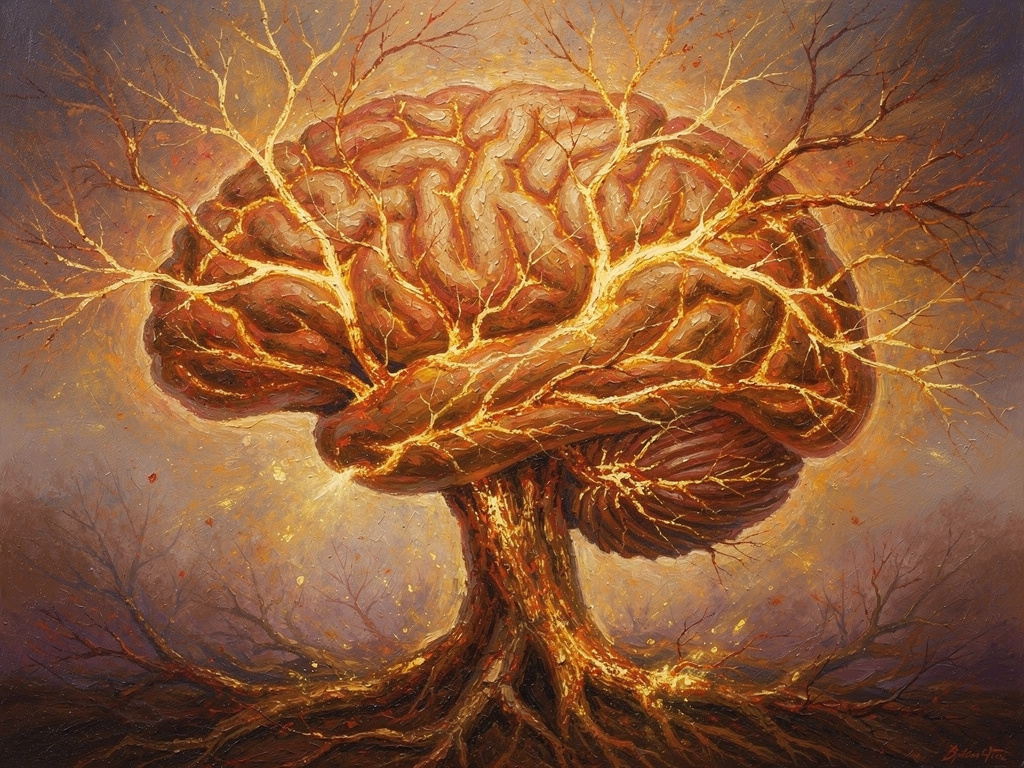
Neural Language Grafting: How Your Brain Builds Mental Models
Explore how your brain's existing mental models and neural pathways enable rapid language acquisition through grafting new connections to existing concepts.
By Geordie Everitt
Your brain already contains a vast network of concepts connected by neural pathways. When you think of "cat," you're not just accessing a simple definition—you're activating a rich, multi-dimensional concept graph that includes:
- Visual features: Whiskers, fur, eyes, tail
- Audio associations: Meowing, purring
- Behavioral patterns: Climbing, hunting, sleeping
- Cultural connections: Halloween, ancient Egypt, internet memes
- Metaphors: "Raining cats and dogs", "cat got your tongue"
- Relationships: Dogs (opposites), mice (prey), pets (category)
- Literature: "The Cat in the Hat", Cheshire Cat
- Geography: Siamese cats → Thailand
This high-dimensional representation is what we call a mental model or concept graph.
The Power of Existing Mental Models
Here's the breakthrough insight: you don't need to build these concept graphs from scratch in your target language. They already exist in your brain.
When you learned English as a child, you spent years building these rich, interconnected mental models. LinguaMama doesn't try to rebuild them—we graft new language connections onto your existing models.
Language Grafting in Action
Consider how this works with the "cat" concept:
- English: "This is a cat. The cat is playing piano."
- Spanish: "Este es un gato. El gato está tocando el piano."
- French: "C'est un chat. Le chat joue du piano."
Your brain isn't learning what a cat is three times. It's learning three different ways to express the same rich concept you've known your whole life.
How Neural Networks Process Concepts
Both human brains and artificial neural networks represent concepts as patterns of activation across many dimensions. In AI terms, this is called an embedding—a high-dimensional vector representation of a concept.
Your brain works similarly:
- Billions of neurons with trillions of connections
- Concepts stored as activation patterns (not discrete files)
- Associations built through experience, not programming
- Compression through repeated exposure to related patterns
When you encounter the Spanish word "gato," your brain doesn't create a new isolated concept. It grafts this word onto your existing "cat" concept graph, creating a new linguistic pathway to access the same rich mental model.
Why This Matters for Language Learning
Traditional language teaching tries to build vocabulary lists and grammar rules in isolation. But your brain doesn't work that way. You learn fastest when:
- New words connect to existing concepts you already understand
- Context provides multiple connection points (visual + audio + situational)
- Repetition strengthens the grafted pathways (not memorization, but natural exposure)
LinguaMama leverages this by showing you familiar scenes and concepts with target-language narration. You're not learning new ideas—you're grafting new language onto ideas you've spent a lifetime building.
The Compression Power of Input
Just as Large Language Models compress billions of examples into efficient neural representations, your brain compresses thousands of exposures to create intuitive language knowledge.
You don't remember every sentence you've ever heard in English. But those millions of exposures compressed into unconscious pattern recognition that lets you instantly know:
- "The cat sat on the mat" (✅ sounds natural)
- "On cat the sat mat the" (❌ clearly wrong)
This same compression happens in your target language through massive comprehensible input. After enough exposure to natural patterns, your brain automatically develops the "feel" for what sounds right.
Building Fluency Through Neural Grafting
The most efficient path to fluency:
- Start with universal concepts: Daily routines, common objects, basic interactions
- Graft target language words onto your existing mental models
- Strengthen connections through repetition: Same content, multiple exposures
- Let grammar emerge naturally: Patterns form unconsciously from input
This is why LinguaMama focuses on familiar, real-world scenes. We're not teaching you about cats or coffee or commutes—you already know these concepts intimately. We're just grafting your target language onto the mental scaffolding that's already there.
The Parallel to AI Training
Modern AI systems like GPT and Claude aren't programmed with language rules. They're exposed to massive amounts of text until neural connections form that represent language patterns. The same thing happens in your brain.
The difference? You have a huge advantage: you've already spent years building mental models for most concepts you'll need. Language learning is just grafting new pathways, not building understanding from scratch.
Conclusion
Your brain is already a sophisticated neural network with rich concept graphs spanning every domain of human experience. Language acquisition isn't about building new understanding—it's about grafting new linguistic pathways onto the mental models you've spent a lifetime developing.
This is why comprehensible input works: You understand the meaning instantly (through context and existing models), and your brain naturally grafts the new language forms onto that existing understanding.
Stop trying to build language from scratch. Start grafting it onto what you already know.